How to Select Between Carbon Fiber and Fiberglass Fins
Finding Your Propulsion: A Guide to Choosing Between Carbon Fiber and Fiberglass Fins
Choosing between carbon fiber and fiberglass fins is not simply about buying the most expensive material. It is about matching blade response, stiffness, durability, and foot-pocket fit to how you actually move through the water.

Both materials convert leg effort into efficient underwater propulsion. Their distinct personalities emerge as kick frequency rises, dive depths increase, or high training volume exposes weaknesses in your setup.
1. Core Material Dynamics: Elastic Return vs. Progressive Flex
When examining mechanical behavior, carbon fiber and fiberglass represent two fundamentally different philosophies in energy transfer and blade movement.
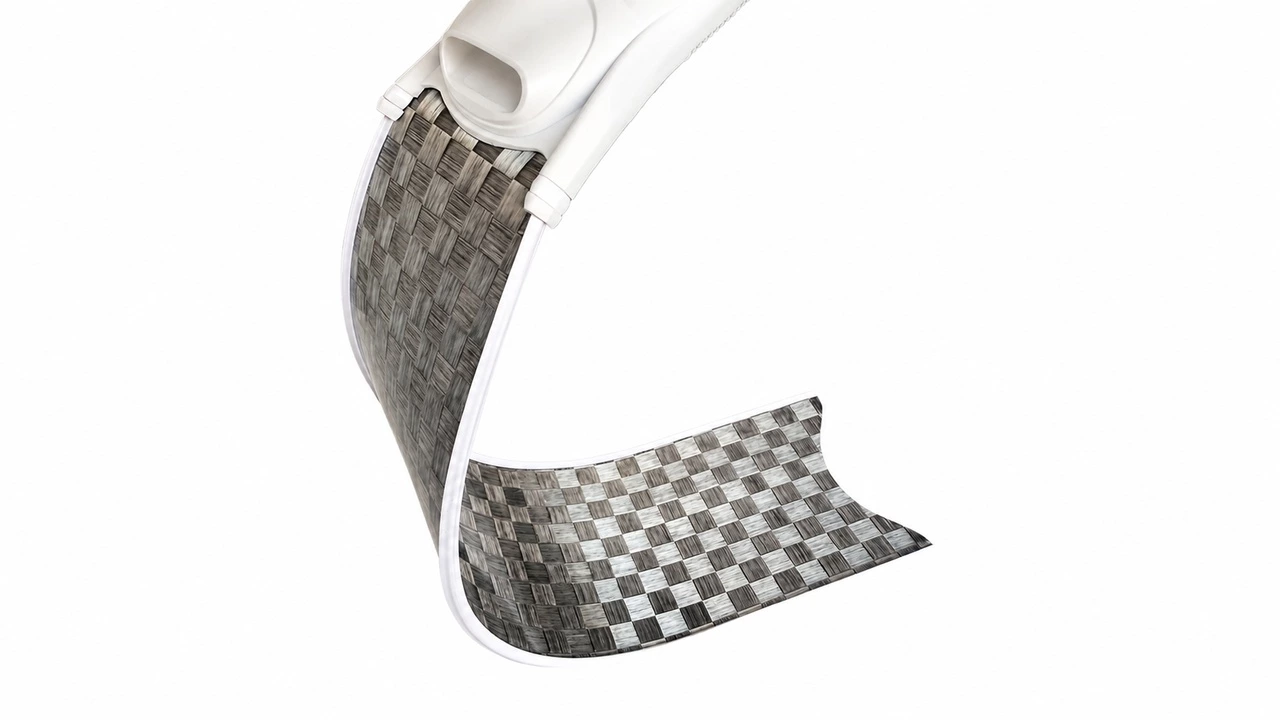
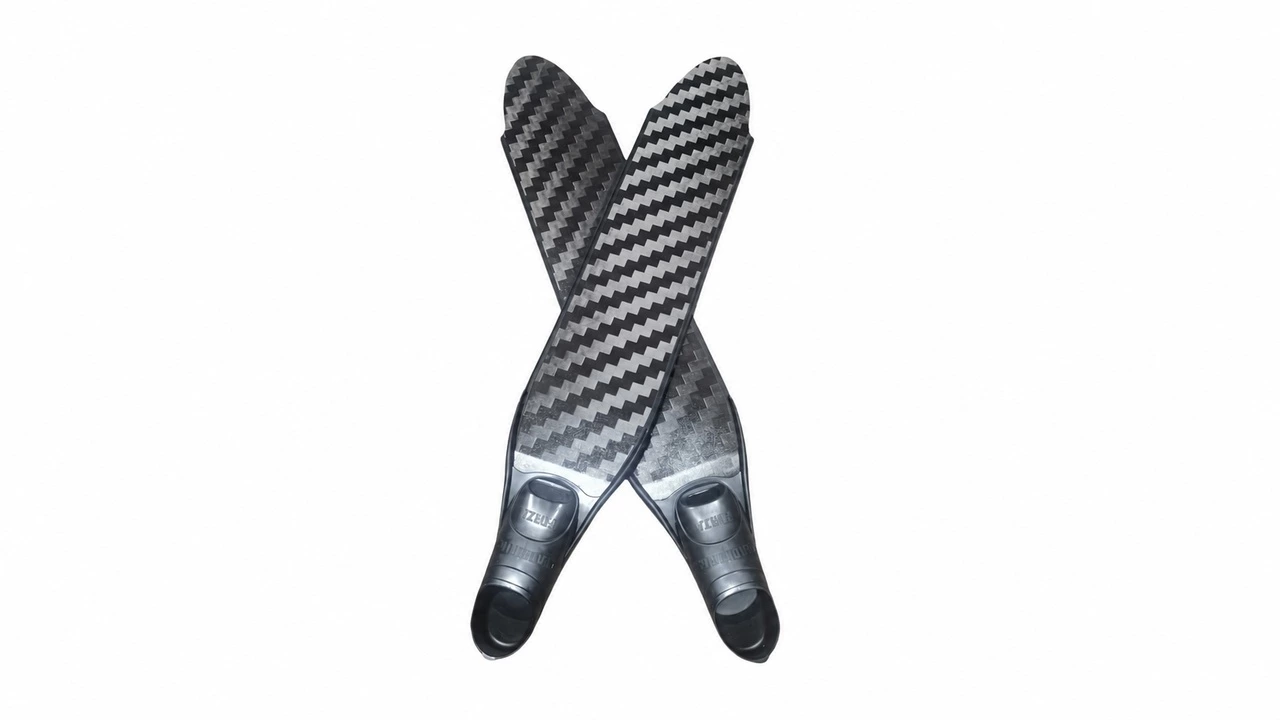
Carbon Fiber Blades: Rapid Snap and High Feedback
-
Mechanical Behavior: Features an intense elastic recovery rate. It stores energy instantly when loaded and snaps back immediately during the kick cycle to deliver maximum forward drive.
-
Swing Weight: Extremely lightweight—especially toward the tip—significantly reducing overall swing mass and leg fatigue during rhythm changes.
-
Technique Requirement: Provides sharp, high-definition feedback. It exposes stroke flaws like excessive knee-bending or an erratic kicking cadence immediately.
-
Durability Profile: Boasts immense bending strength, but requires mindful handling around sharp point impacts, rock edges, and rough boat decks.
-
Primary Advantage: Delivers maximal energy efficiency, crisp response, and explosive performance for divers with established kicking mechanics.
Fiberglass Blades: Smooth Loading and Rugged Resilience
-
Mechanical Behavior: Exhibits a smooth, progressive flex pattern. The blade bends linearly throughout the kick, absorbing force evenly and offering exceptional forgiveness.
-
Swing Weight: Moderately heavier than carbon, but noticeably lighter and far more dynamic than traditional plastic fins.
-
Technique Requirement: Delivers lower to moderate feedback. It easily absorbs imperfect technique and reduces stress on the ankles, calves, and hips.
-
Durability Profile: Exceptional physical toughness. It easily withstands rough shore entries, jagged reefs, and demanding travel conditions.
-
Primary Advantage: Offers long-lasting durability, a smooth, fatigue-reducing feel, and an outstanding performance-to-cost ratio.
2. Material Characteristics Under the Surface
Why Carbon Blades Feel Faster
Carbon fiber drastically reduces blade weight toward the tip. This lower swing weight helps maintain a clean, high-cadence kick rhythm with minimal energy expenditure during recovery phases.

The immediate rebound allows skilled divers to hold speed using a narrower, more hydrodynamically efficient kick amplitude. However, this responsiveness demands sound technique. If you kick by over-bending at the knees or select a stiffness beyond your leg strength, carbon blades can feel abrupt and fatiguing rather than smooth.
Where Fiberglass Earns Its Place
Fiberglass remains a preferred choice for many experienced athletes and a recommended starting point for developing divers. Its progressive flex loads smoothly rather than reacting all at once, reducing strain across the ankles, calves, and lower back during long sessions.
For spearfishing and rugged open-water conditions, fiberglass offers significant practical advantages. It tolerates shore entries, rocky bottoms, and tight reef structures far better than lightweight carbon laminates. Furthermore, its smooth loading makes it ideal for high-volume pool training and conditioning.
3. Step-by-Step Selection Methodology
Step 1: Choose Stiffness Before Material
Material selection should always follow stiffness selection. A blade that is too hard prevents full loading, forcing the diver into an inefficient "bicycle kick."
-
Soft: Ideal for lighter divers, relaxed kick styles, long surface swims, pool distance training, and preserving oxygen.
-
Medium: The broadest performance range for trained freedivers, spearfishers, and regular fitness swimmers.
-
Hard / Heavy: Reserved for athletes with exceptional leg strength, high body mass, heavy ballast/wetsuits, or sprint-focused training.
Rule of Thumb: Select the stiffness that allows you to complete a full, controlled blade load through an entire training session without exhausting your hip flexors or forcing wide knee bends. If between sizes, choose the softer option.
Step 2: Align with Your Primary Discipline
-
Freediving: Carbon excels for deep, technique-focused freediving due to its low swing weight and minimal energy loss. Fiberglass is excellent for technique development and long training sessions.
-
Spearfishing: Fiberglass is often superior for shallow reefs, rough shorelines, and heavy gear setups. Carbon suits spearfishers making long surface swims in open water who can protect their equipment from hard impacts.
-
Finswimming & Lifesaving: Carbon provides immediate acceleration and sprint power for competition. Fiberglass is ideal for regular training, youth athletes, and high-frequency pool laps.
4. Foot Pocket Integration and System Fit
A high-performance blade cannot compensate for an ill-fitting foot pocket. The pocket is the energy transfer bridge between your leg and the blade.
-
Sizing Precision: Heel lift or lateral movement wastes propulsion energy before it reaches the blade. Always measure foot length and width while wearing the exact neoprene sock thickness used during dives.
-
Modular Systems: Interchangeable blade-to-pocket connections allow divers to keep a proven, comfortable foot pocket while upgrading blades from fiberglass to carbon as technique advances.
5. Maintenance and Long-Term Care
To preserve the dynamic response and flex pattern of composite fins:
-
Rinse & Clean: Flush away saltwater crystals and grit after every session.
-
Protect Against Impact: Transport blades in a padded bag and avoid storing heavy gear on top of them.
-
Avoid Extreme Heat: Do not leave composite blades in hot cars or direct sunlight for extended periods, as high heat can weaken the resin matrix and degrade flex characteristics over time.