Let’s talk about carbon fiber windsurf masts
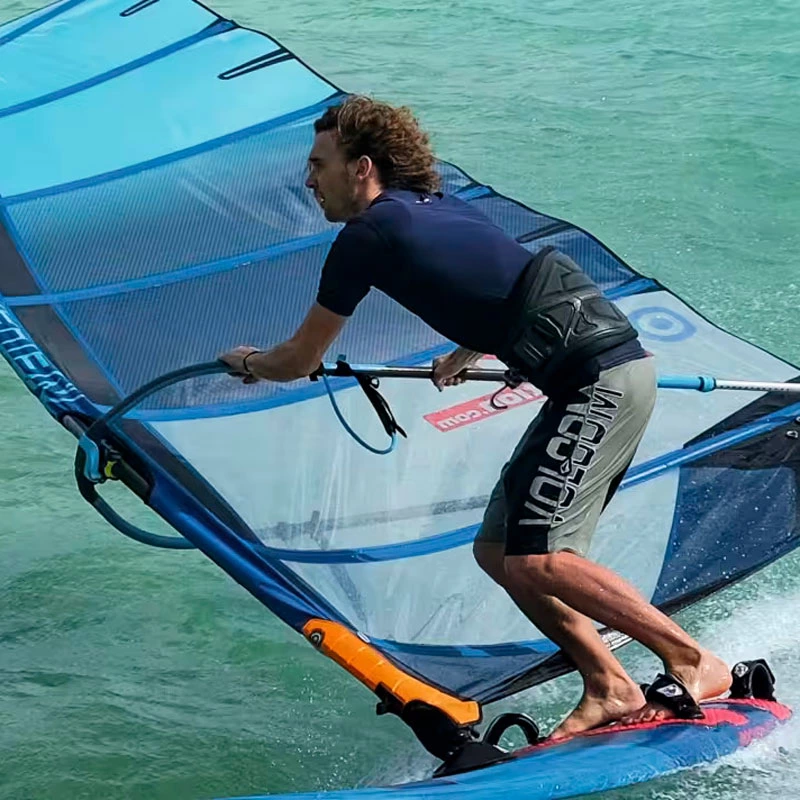
A mast is just a stick that keeps your sail upright, right? Not really. It's quite literally the backbone of your rig.
The mast forms the foundation of your entire setup. Every force from your sail, every vibration from your board, and every movement you make as a sailor flows through it. When your mast doesn't match your sails or your preferences, it limits your performance and takes the enjoyment out of the experience.
Getting Started: Match Your Mast to Your Sail
Your first step should always be checking the specs on your sail or sail bag. Sail manufacturers design their sails around specific mast types and lengths, so buying masts and sails from the same brand is the safest approach. That said, many brands use similar mast specifications, which means mixing and matching across manufacturers is often possible.
Three Key Factors to Consider
When selecting a mast, focus on three main characteristics: carbon content, bend curve, and stiffness. Each plays a significant role in how your rig performs.
Understanding Carbon Content
Windsurf masts typically contain between 30% and 100% carbon fibre, mixed with glass fibres and held together with epoxy resin. The carbon content directly affects four key aspects:
- Price: Carbon fibre is expensive, so higher carbon content means a higher price tag.
- Weight: More carbon means less weight, which makes your sail easier to control and maneuver.
- Response: Higher carbon content delivers a more responsive and direct feel through your rig.
- Durability: Carbon is vulnerable to impact damage. A 100% carbon mast requires careful handling to avoid cracks and weak points.
Bend Curve: How Your Mast Flexes
Masts are classified into three bend curve categories, which describe how they flex along their length:
- Hard Top: Flexible base with a stiffer top section.
- Constant Curve: Even stiffness throughout—the most common profile.
- Flex Top: Stiff base with a more flexible top section.
Modern masts also come in refined versions: Constant FL Curve (more flex in the lower-middle section) and Constant FH Curve (more flex higher up with a stiffer centre).
When combining masts and sails from different brands within the same bend curve category, you can be confident the pairing will work well enough. However, mixing drastically different bend curves can compromise your sail's intended profile and performance.
If your mast flexes too much like a flex top, expect a looser leech with less power, battens sitting closer to the mast, and the centre of effort shifting downward. If it's too stiff like a hard top, you'll experience a tighter leech that's harder to control in gusts, a flatter profile with less power, and a higher centre of effort.
For planing and powered-up windsurfing, a mast that's slightly too flexible is generally more forgiving than one that's slightly too stiff.
Stiffness: The IMCS Rating
The IMCS value measures how much your mast bends under load. A lower IMCS means a softer, more flexible mast.
Manufacturers follow fairly standardised stiffness levels for each mast length. A 400 mast is typically 19 IMCS, 430s are 21, 460s are 25, and 490s are 29. This explains why longer masts are stiffer than shorter ones.
Stiffer masts offer more power, a fuller sail profile, better support for heavier riders, and excellent performance on flat water. Softer masts provide less power, a flatter profile, a more forgiving feel, better control, and suit lighter riders.
Fine-Tuning Your Setup
You can adjust your mast's stiffness and bend curve by extending or cutting it. One practical approach is adding a 30 cm extension to the bottom of a shorter mast—for example, extending a 430 mast to 460 length will give you approximately the stiffness of the original 430. This is an easy way to soften your rig without replacing the entire mast.