
Carbon Fiber Film Guide Rollers Manufacturer | Custom Solutions
Carbon Fiber Film Guide Rollers
Custom carbon fiber film guide rollers manufactured using prepreg roll-wrapping technology. Lightweight, high-stiffness rollers for plastic film extrusion, laminating, coating and rewinding machines.
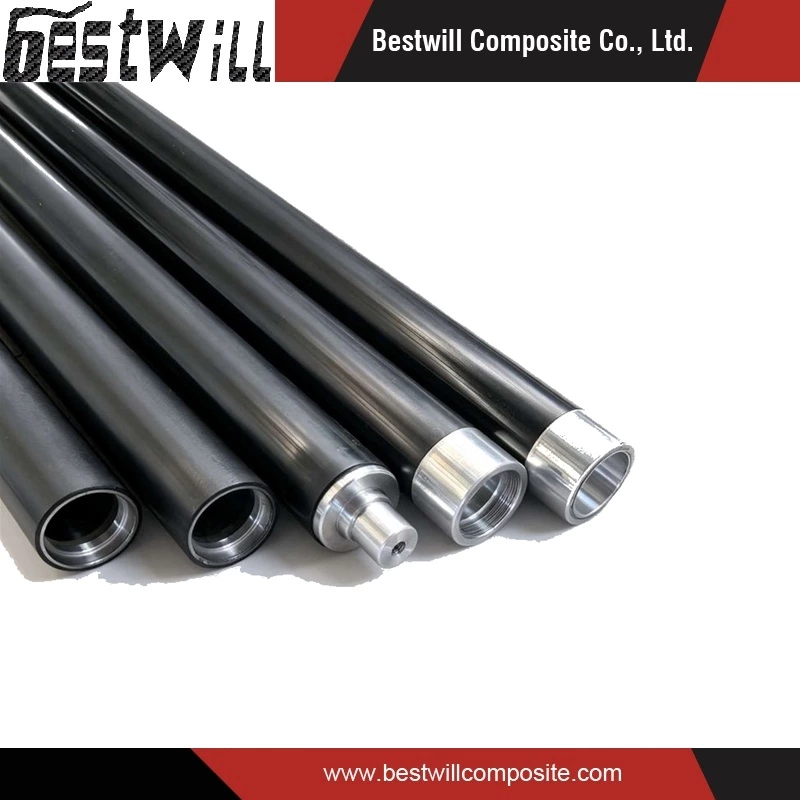
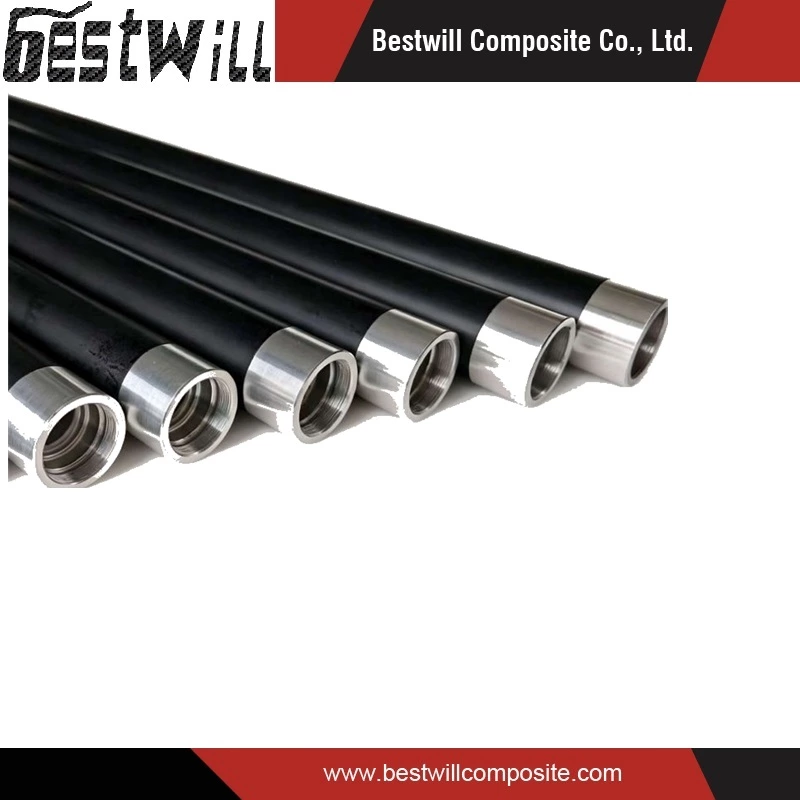
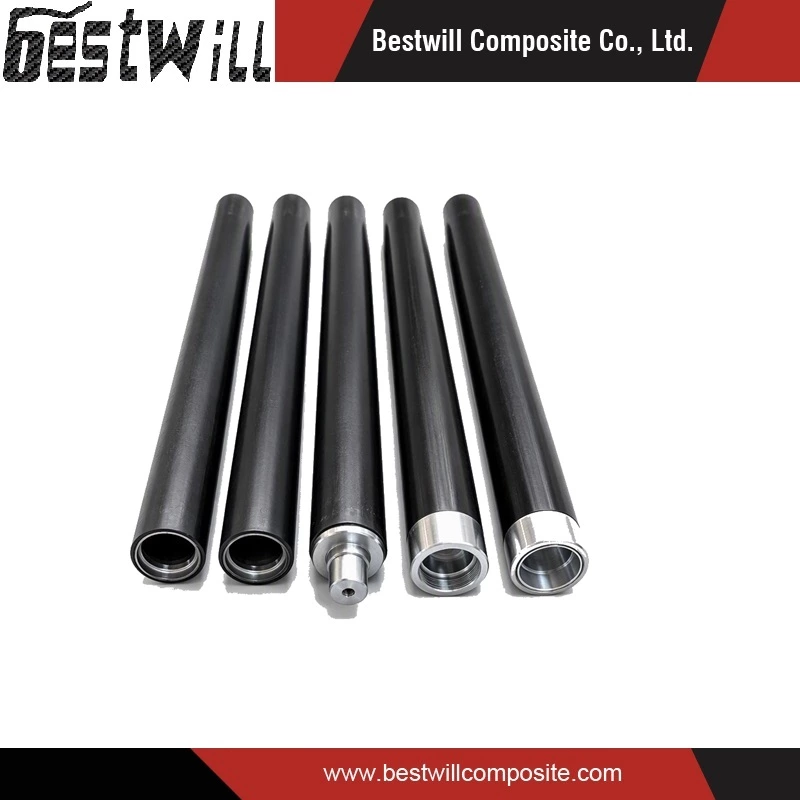
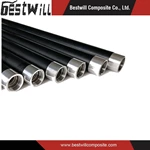
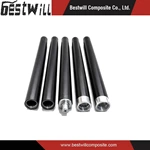
Carbon Fiber Film Guide Rollers – Lightweight, High-Stiffness Solutions for Film Production Lines
What Are Carbon Fiber Film Guide Rollers?
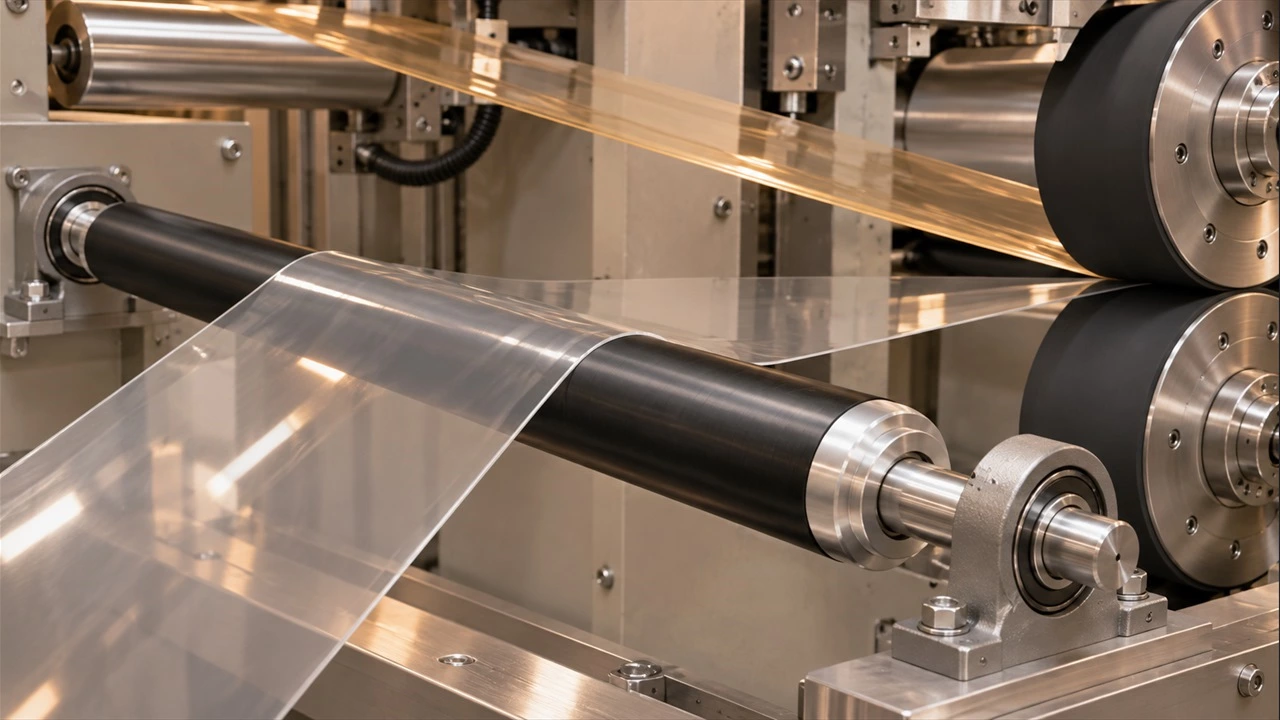
Carbon Fiber Film Guide Rollers are lightweight composite rollers designed to guide, transport, and support plastic films in industrial production and converting processes.
Manufactured from carbon fiber reinforced polymer (CFRP) using carbon fiber prepreg roll-wrapping technology, these rollers combine low weight, high bending stiffness, and low rotational inertia.
They are widely applicable to plastic film extrusion, blown film production, laminating, coating, slitting, and rewinding equipment.
Compared with conventional metal rollers, properly designed carbon fiber rollers can reduce rotating mass, improve acceleration and deceleration response, and help maintain stable film transportation at demanding production speeds.
Custom carbon fiber film guide rollers can be manufactured with different diameters, lengths, wall thicknesses, fiber orientations, metal end connections, and surface finishes according to machinery requirements.
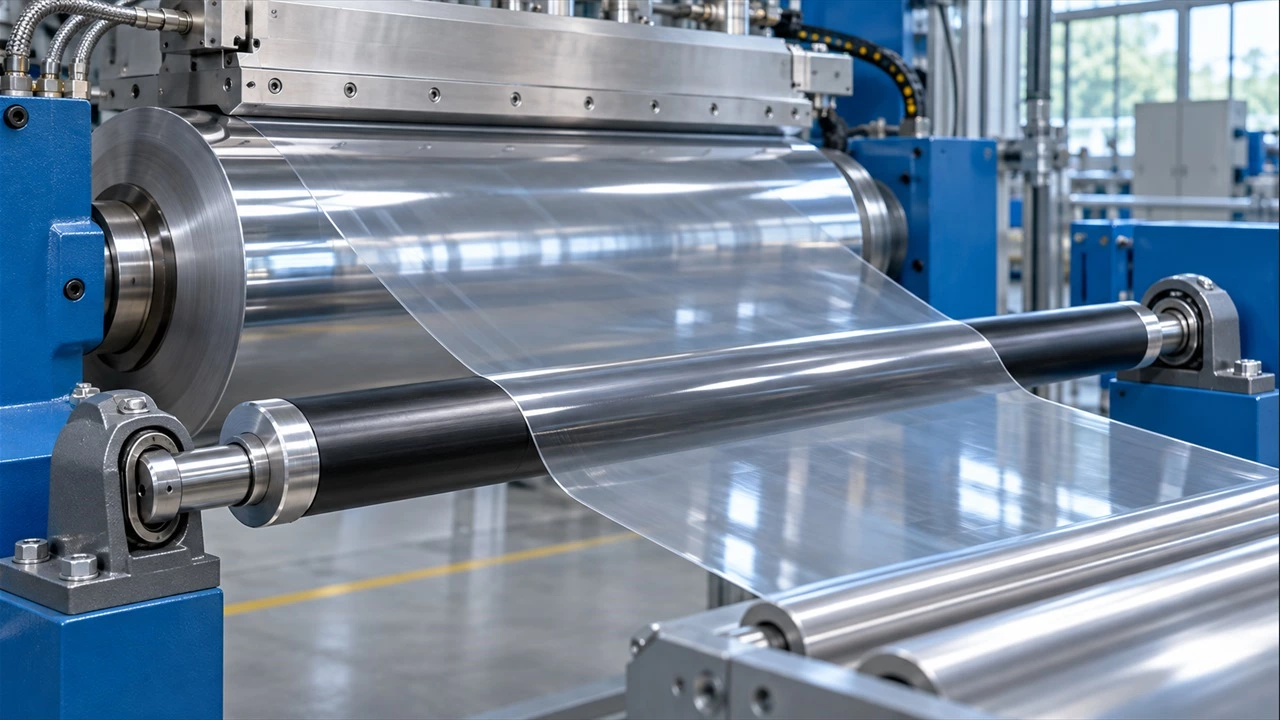
Carbon Fiber Film Guide Roller Manufacturing
Carbon fiber film guide rollers are manufactured using carbon fiber prepreg roll-wrapping technology.
This process uses epoxy resin pre-impregnated carbon fiber materials to build a composite tube with carefully designed fiber orientations and laminate thicknesses.
The composite tube is subsequently cured, machined, and finished to meet the required dimensional and mechanical specifications.
A typical carbon fiber film guide roller consists of:
-
Carbon Fiber Composite Tube: The main structural body, manufactured from carbon fiber prepreg and epoxy resin.
-
Metal Shaft Ends: Precision-machined metal components for mounting and connection to the machine.
-
Bearing Interfaces: Designed according to the required bearing and installation configuration.
-
Roller Surface: Precision-ground or finished according to the film handling requirements.
-
Optional Surface Coating: Customized protective or functional coatings when required.
The complete roller design is determined by its operating speed, applied load, support arrangement, film material, and installation requirements.
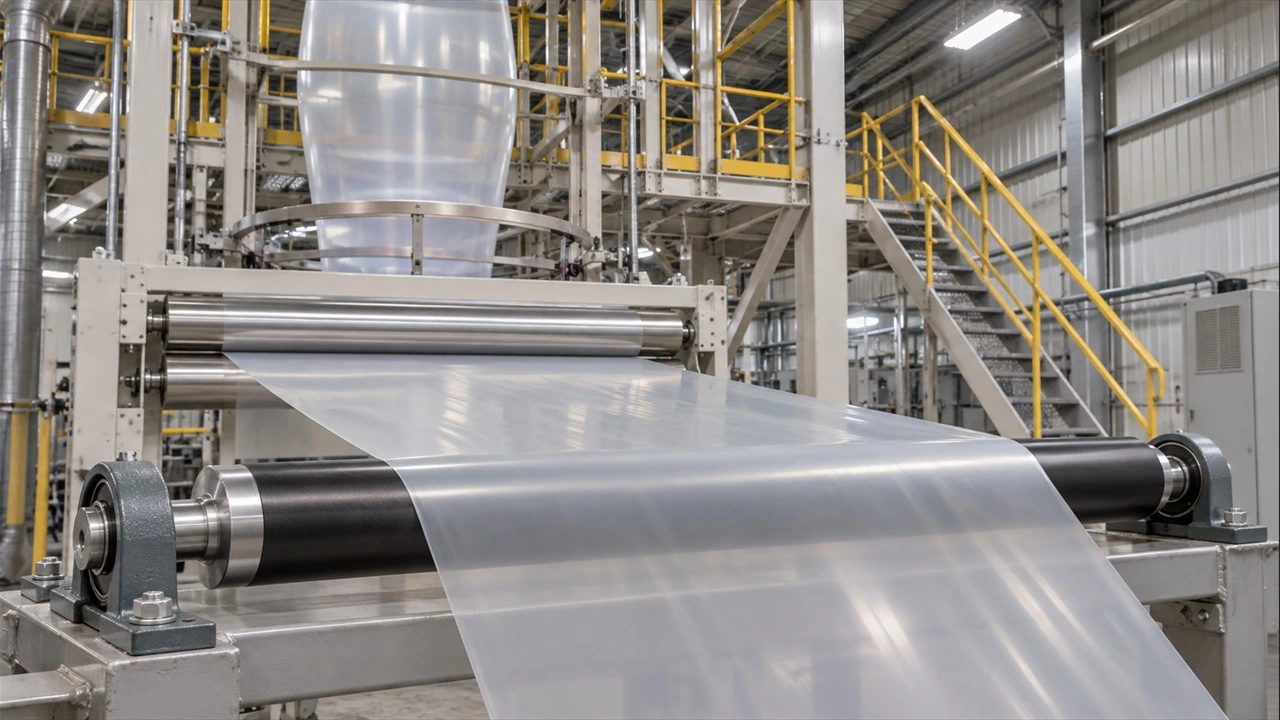
Applications of Carbon Fiber Film Guide Rollers
Carbon fiber film guide rollers are suitable for different stages of plastic film manufacturing and converting.
1. Plastic Film Extrusion Lines
Film extrusion lines require reliable roller systems to guide continuously produced films through cooling, stretching, treatment, and winding processes.
Carbon fiber guide rollers can be used as:
-
Film Guide Rollers
-
Film Transport Rollers
-
Deflection Rollers
-
Contact Rollers
-
Web Guiding Rollers
-
Tension Control Rollers
Their lightweight structure helps reduce rotational inertia and improve the responsiveness of film handling systems.
2. Blown Film Production Lines
In blown film manufacturing, guide rollers help transport and stabilize plastic film during downstream processing.
Carbon fiber rollers can be customized for film guiding, web transportation, and winding sections.
Their lightweight construction and engineered bending stiffness can help support stable operation and reduce weight-related loads on supporting components.
3. Film Stretching and Orientation Equipment
Film stretching and orientation processes require stable roller operation and precise material transportation.
Carbon fiber rollers can be designed for:
-
Stretching Line Guide Rollers
-
Film Transport Rollers
-
Deflection Rollers
-
Contact Rollers
-
Tension Control Rollers
The composite laminate structure can be engineered according to the mechanical requirements of the production line.
4. Laminating and Coating Machines
Carbon fiber guide rollers are suitable for film transportation in laminating and coating production lines.
Typical applications include:
-
Laminating Machine Rollers
-
Coating Line Guide Rollers
-
Web Transport Rollers
-
Film Contact Rollers
-
Deflection Rollers
Roller surface finish and coating options can be selected according to the material being processed and the production environment.
5. Slitting and Rewinding Machines
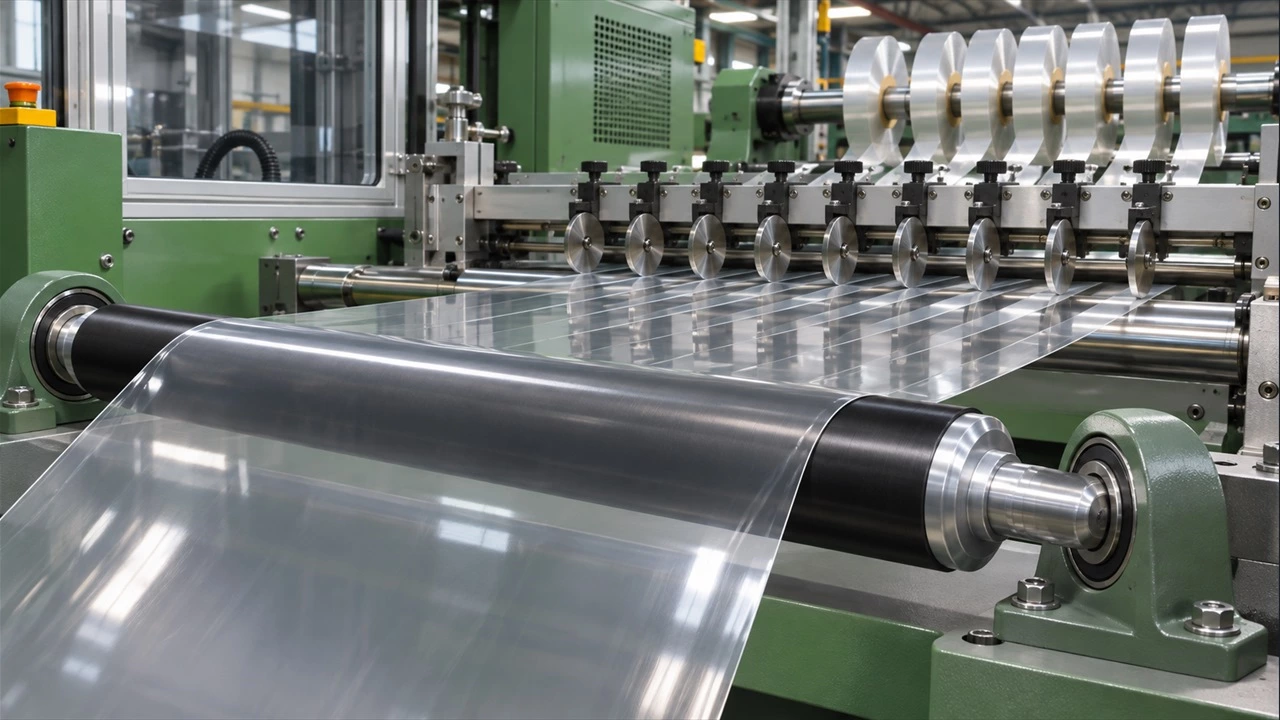
Slitting and rewinding equipment requires consistent web transportation and reliable roller performance.
Carbon fiber rollers can help reduce rotational inertia, supporting faster acceleration and deceleration when production speeds change.
Typical applications include:
-
Slitting Machine Guide Rollers
-
Rewinding Machine Rollers
-
Unwinding Machine Rollers
-
Web Handling Rollers
-
Film Tension Control Rollers
Why Choose Carbon Fiber Film Guide Rollers?
1. Lightweight Construction
Carbon fiber composites have a high strength-to-weight ratio and can provide substantial weight savings compared with appropriately designed metal rollers.
The reduced roller mass offers several potential benefits:
-
Easier installation and maintenance
-
Reduced rotational inertia
-
Lower weight-related bearing loads
-
Improved acceleration and deceleration response
-
Reduced mechanical loading on supporting components
The actual weight reduction depends on roller diameter, wall thickness, laminate design, and metal end components.
2. High Bending Stiffness
One of the main advantages of carbon fiber composite rollers is their high stiffness-to-weight ratio.
By adjusting fiber orientation, laminate thickness, and tube geometry, the roller can be designed to achieve the required bending stiffness.
This helps control deflection under specified operating loads and maintain stable film transportation.
3. Low Rotational Inertia
Rotational inertia is an important consideration in high-speed film processing equipment.
The lightweight construction of carbon fiber rollers can reduce rotational inertia compared with heavier metal alternatives of comparable design.
This helps improve machine responsiveness during acceleration and deceleration and can reduce the energy required to change rotational speed.
4. Vibration Control and Dynamic Stability
Roller vibration can affect film quality, web stability, and production efficiency.
Carbon fiber composite materials provide useful vibration-damping characteristics. Combined with precision machining, appropriate bearing arrangements, and dynamic balancing, they can support stable roller operation.
Dynamic balancing requirements should be determined according to roller dimensions, operating speed, and application conditions.
5. Dimensional Stability
A properly engineered carbon fiber laminate structure can provide good dimensional stability under specified operating conditions.
Precision machining and grinding help achieve the required diameter, straightness, roundness, and surface finish.
These properties are important for applications requiring consistent film transportation and controlled web handling.
6. Corrosion Resistance
Carbon fiber composite tubes offer good corrosion resistance in many industrial environments compared with conventional steel structures.
The epoxy resin system and optional protective surface treatments can be selected according to temperature, humidity, and chemical exposure requirements.
7. Customized Surface Finishes
Different film production processes require different roller surface characteristics.
Available surface treatment options can include:
-
Precision Ground Composite Surface
-
Smooth Composite Surface
-
Polyurethane (PU) Coating
-
Rubber Coating
-
Customized Protective Coatings
The appropriate surface finish depends on the film material, contact conditions, friction requirements, and production process.
Carbon Fiber Prepreg Roll-Wrapping Technology
Our carbon fiber film guide rollers are manufactured using carbon fiber prepreg roll-wrapping technology.
Carbon fiber prepreg consists of reinforcing fibers pre-impregnated with a controlled resin content, providing a consistent starting material for composite manufacturing.
How Are Carbon Fiber Layers Arranged?
The mechanical performance of a carbon fiber roller depends on its fiber orientation, laminate thickness, resin system, and structural design.
Different fiber orientations contribute to different mechanical properties:
0° Fiber Orientation
Primarily contributes to axial stiffness and bending performance.
±45° Fiber Orientation
Helps improve torsional stiffness and shear performance.
90° Fiber Orientation
Provides circumferential reinforcement and helps resist hoop stresses.
The combination of different fiber orientations allows the composite structure to be engineered for specific operating requirements.
Manufacturing Process
Our carbon fiber prepreg roll-wrapping process typically includes the following steps:
Step 1 – Prepreg Material Preparation
Carbon fiber prepreg materials are selected and cut according to the required tube dimensions and laminate design.
Step 2 – Laminate Design
Fiber orientations, layer thicknesses, and material configurations are determined according to the required mechanical properties.
Step 3 – Prepreg Roll Wrapping
Multiple layers of carbon fiber prepreg are wrapped around a precision mandrel to form the composite tube.
Step 4 – Controlled Curing
The wrapped composite structure is cured according to the resin system's specified processing conditions.
Step 5 – Precision Machining
After curing and mandrel removal, the composite tube is trimmed, machined, and ground to achieve the required dimensions and surface finish.
Step 6 – Roller Assembly
Metal shaft ends and other mechanical components are integrated according to the roller design.
Step 7 – Quality Inspection
The finished roller is inspected according to the approved drawings and technical specifications.
Technical Specifications of Custom Carbon Fiber Film Guide Rollers
| Parameter | Specification |
|---|---|
| Product Name | Carbon Fiber Film Guide Roller |
| Material | Carbon Fiber Reinforced Polymer (CFRP) |
| Reinforcement | Carbon Fiber Prepreg |
| Resin System | Epoxy Resin |
| Manufacturing Process | Prepreg Roll Wrapping |
| Roller Diameter | Customized |
| Roller Length | Customized |
| Wall Thickness | Customized |
| Fiber Orientation | Customized Laminate Design |
| Shaft Ends | Metal or Customized Components |
| Surface Finish | Precision Ground / Customized |
| Surface Coating | PU, Rubber or Other Options |
| Dynamic Balancing | Available According to Requirements |
| Operating Speed | According to Application Requirements |
| Operating Temperature | According to Resin System and Application |
| Application | Film Extrusion, Laminating, Coating, Slitting and Rewinding |
Note: Final specifications are determined according to customer drawings, operating conditions, and engineering requirements.
Quality Control and Testing
Quality control is essential for carbon fiber rollers used in industrial film production lines.
Our inspection and testing capabilities include the following:
Dimensional Inspection
Roller diameter, length, roundness, and machining accuracy are inspected according to approved drawings and tolerances.
Straightness and Deflection Testing
Deflection testing evaluates the bending behavior and structural stiffness of the roller under specified loading and support conditions.
Dynamic Balancing Testing
Dynamic balancing helps control residual unbalance and reduce vibration during rotation.
The required balancing quality grade and test speed are determined according to the roller configuration and operating requirements.
Surface Quality Inspection
The roller surface is inspected to ensure that its finish meets the requirements of the intended film handling application.
Assembly and Functional Inspection
Metal end connections, bearing interfaces, and other assembled components are checked according to the approved product specifications.
Carbon Fiber Rollers vs. Traditional Metal Rollers
| Performance Factor | Carbon Fiber Rollers | Steel Rollers | Aluminum Rollers |
|---|---|---|---|
| Weight | Lightweight | Generally Heavy | Relatively Lightweight |
| Stiffness-to-Weight Ratio | High | Depends on Design | Depends on Design |
| Rotational Inertia | Low Potential | Generally Higher | Relatively Low |
| Corrosion Resistance | Good | May Require Protection | Generally Good |
| Composite Layup Customization | Available | Not Applicable | Not Applicable |
| Vibration Damping | Composite Material Damping | Depends on Structure | Depends on Structure |
This is a general qualitative comparison. Actual performance depends on material grade, dimensions, wall thickness, structural design, and operating conditions.
How to Select the Right Carbon Fiber Film Guide Roller
Selecting the correct roller requires consideration of the production line's mechanical and operating conditions.
Before requesting a quotation, prepare the following information:
| Required Information | Description |
|---|---|
| Roller Diameter | Required outside diameter |
| Roller Length | Overall length and working face length |
| Operating Speed | Maximum rotational speed in RPM |
| Applied Load | Maximum load and loading position |
| Support Arrangement | Bearing positions and support span |
| Film Material | Film type and thickness |
| Operating Temperature | Actual working temperature |
| Surface Requirements | Required roughness or coating |
| Shaft Ends | Connection and bearing dimensions |
| Installation Drawings | Technical drawings or reference samples |
Providing these details helps determine the appropriate composite structure, wall thickness, fiber orientation, and machining requirements.
Frequently Asked Questions
What is a carbon fiber film guide roller?
A carbon fiber film guide roller is a lightweight composite roller used to guide and transport plastic films in extrusion, laminating, coating, slitting, and rewinding production lines.
Why are carbon fiber rollers used in film production lines?
Carbon fiber rollers offer a high stiffness-to-weight ratio and low rotational inertia. They can reduce roller weight, improve acceleration and deceleration response, and help maintain stable film transportation when properly designed.
How are carbon fiber film guide rollers manufactured?
They can be manufactured using carbon fiber prepreg roll-wrapping technology. Pre-impregnated carbon fiber layers are arranged in specified orientations, wrapped around a precision mandrel, cured, and precision-machined.
Can carbon fiber film guide rollers be customized?
Yes. Roller diameter, length, wall thickness, fiber orientation, metal shaft ends, and surface finish can be customized according to customer drawings and machinery requirements.
Are carbon fiber rollers suitable for high-speed film production lines?
They can be suitable for high-speed applications when the roller structure, stiffness, critical speed, bearing arrangement, and dynamic balance are properly engineered for the operating conditions.
Do carbon fiber film guide rollers require dynamic balancing?
Dynamic balancing is important for rollers operating at higher rotational speeds. The required balancing grade depends on roller dimensions, operating speed, and application requirements.
What information is needed for a carbon fiber roller quotation?
Customers should provide the roller diameter, overall length, working length, operating speed, applied load, support arrangement, surface requirements, and installation drawings whenever available.
Custom Carbon Fiber Film Guide Roller Manufacturer
We manufacture customized carbon fiber composite rollers using carbon fiber prepreg roll-wrapping technology.
Our manufacturing capabilities include composite tube production, precision machining, cylindrical grinding, metal end integration, and quality inspection.
We provide carbon fiber roller solutions for plastic film extrusion, blown film production, laminating, coating, slitting, rewinding, and other industrial web handling applications.
Whether you are a machinery manufacturer, film producer, or industrial equipment supplier, we can develop customized carbon fiber film guide rollers according to your drawings and application requirements.
Looking for a carbon fiber film guide roller manufacturer? Contact us with your technical drawings and application requirements to discuss a customized solution.